
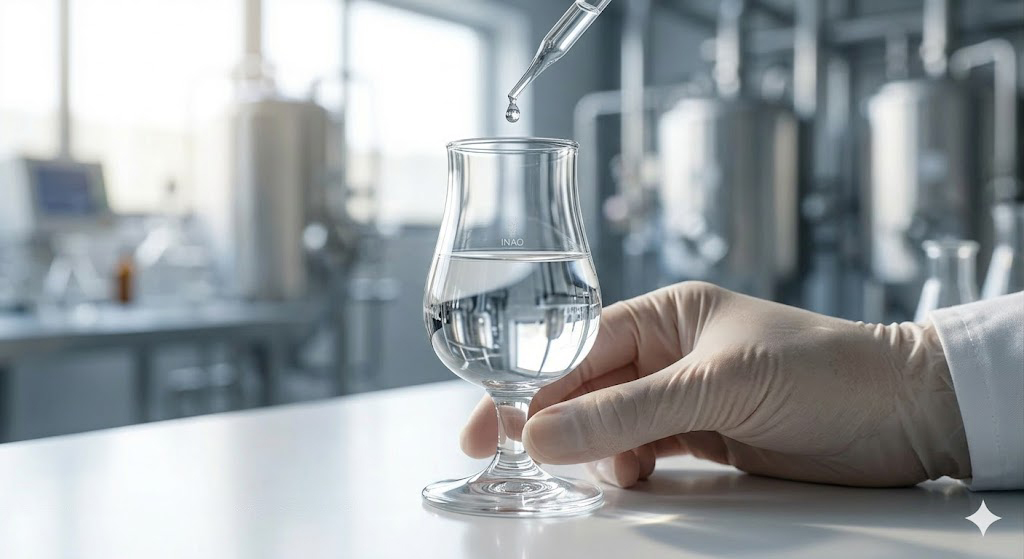
Purity guaranteed by selective distillation
A food grade alcohol is an alcohol of agricultural origin obtained by fermentation followed by multi-stage distillation. At Nadal Alcools, we select plant-based raw materials suited to each specific need:- Wheat, through our Pur Spirit® alcohol made from French soft wheat, for its roundness and neutrality suited to premium spirits;
- sugar beet, for its quality and consistency;
- wine origin (grape), for its elegance and its upcycling of vine co-products;
- sugarcane, for alcohols made from molasses or juice, used in particular in certain spirits;
- the certified organic supply chain, for products meeting organic farming specifications.
The characteristics of a “food grade” alcohol
What defines its “food grade” quality is the drastic, near-total elimination of impurities. A high-quality extra neutral alcohol has a neutral profile, characterized by:- No methanol: kept at levels far below European standards;
- sensory neutrality: no off-flavors or foreign odors;
- physical stability: essential to avoid precipitates or cloudiness (louching) during reduction or blending.
Did you know?
In practice, these parameters directly determine how the alcohol behaves in your recipes:- clarity after dilution,
- aroma stability,
- reproducibility of macerations.
Standards, traceability and compliance: the 3 pillars of safety
To be certified compliant, alcohol must meet precise standards, notably in Europe under the spirit drinks regulation EU 2022/1303 (amending regulation EU 2019/787). At Nadal Alcools, the “food grade” definition rests on three pillars:Exclusively agricultural origin
Unlike industrial alcohols derived from petrochemicals (synthetic alcohols), food alcohol must come from biomass.Complete traceability
Every batch is documented. We provide full tracking all the way to delivery at your facilities. This transparency is essential for your certification audits (HACCP, ISO 22000, organic).Logistics hygiene and certified containers
The risk of cross-contamination is controlled. Storage and transport take place exclusively in stainless steel tanks or food grade HDPE containers, guaranteed free from phthalate or heavy metal transfer. This is an often underestimated point: a compliant alcohol can be altered by unsuitable logistics.Safety at the heart of your recipe
Using a certified “food grade” alcohol means securing your value chain and ensuring the stability of your finished product. A non-compliant or unstable alcohol can lead to serious consequences:- Color drift: unexpected change in the color of your liqueurs.
- Aromatic instability: premature oxidation of delicate aromas.
- Legal risks: non-compliance during fraud control inspections.
- Health risks.
Since 1835, Nadal Alcools has supported craft producers and manufacturers in the food industry, guaranteeing not only regulatory compliance but also the analytical consistency essential to the most demanding recipes.